 DONATIONS
EXHIBITS
The Marine Science Center complex includes a 5,000-square-foot visitor center filled with fascinating aquariums and educational displays that highlight Volusia County’s marine environments. Take your time as you explore these interactive, immersive and hands-on exhibits and start a conversation with our knowledgeable volunteers to gain an in-depth understanding of the remarkable marine life that calls Volusia County home.
Artificial Reef Exhibit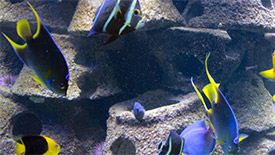
Since 1970, Volusia County has created more than 60 artificial reefs offshore, transforming retired ships, barges, concrete structures, and other large materials into thriving marine habitats. These reefs provide essential shelter, feeding grounds, and nursery space, turning areas of bare seafloor into complex living ecosystems. Our 5,000-gallon Artificial Reef Exhibit brings this story to life above the surface. At the center of the exhibit is a replica of The Lady Philomena, a historic vessel intentionally sunk off the coast of Volusia County and now a successful artificial reef. The exhibit reflects what divers experience underwater and allows guests to explore an artificial reef up close without getting wet. Meet live reef inhabitants, learn how artificial reefs support fisheries and marine biodiversity, and discover how science and conservation work together to enhance ocean habitats. Visit the exhibit to see how human innovation can help create healthier oceans. Learn more about Volusia County’s Artificial Reef Program.
Working Coral Lab Exhibit
The Working Coral Lab brings coral research out of the lab and into public view. This interactive exhibit allows our team to conduct 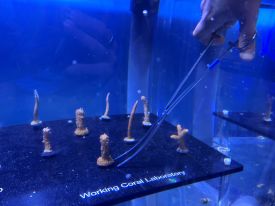 real-time experiments on live corals, giving guests a unique opportunity to observe marine science as it happens. In partnership with Daytona State College, we are measuring coral growth using buoyant weight measurements to compare how different lighting conditions affect coral health and growth. This research helps advance coral conservation efforts while providing valuable educational opportunities or students and visitors alike.
Estuary and Living Shoreline Exhibits
Estuaries occur in areas where freshwater rivers and creeks meet the ocean, and they are one of the most productive ecosystems on earth. Volusia County spans nearly 50 miles of Florida’s East Coast and hosts an extensive variety of estuary habitat. Immerse yourself under the mangrove trees at our Estuary Exhibit while you experience firsthand how these areas shelter live fish and invertebrates, and learn why we call them “the cradle of the sea.” Learn more about Volusia County and the Estuarine Restoration Program.
Living Reef Exhibit
Coral reefs are the largest structures built by any organism on Earth, and they host more forms of life than any other marine habitat. Florida and 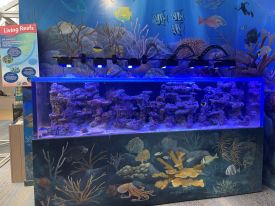 Volusia County’s living coral reefs form vital habitats for commercial fisheries, offer shoreline protection, and provide billions of dollars annually to the state’s economy. Discover why living reefs are so important and threatened as you enjoy the beauty of live corals, dozens of reef fish, and colorful invertebrates in our Living Reef Aquarium.
Touch Pool Exhibit
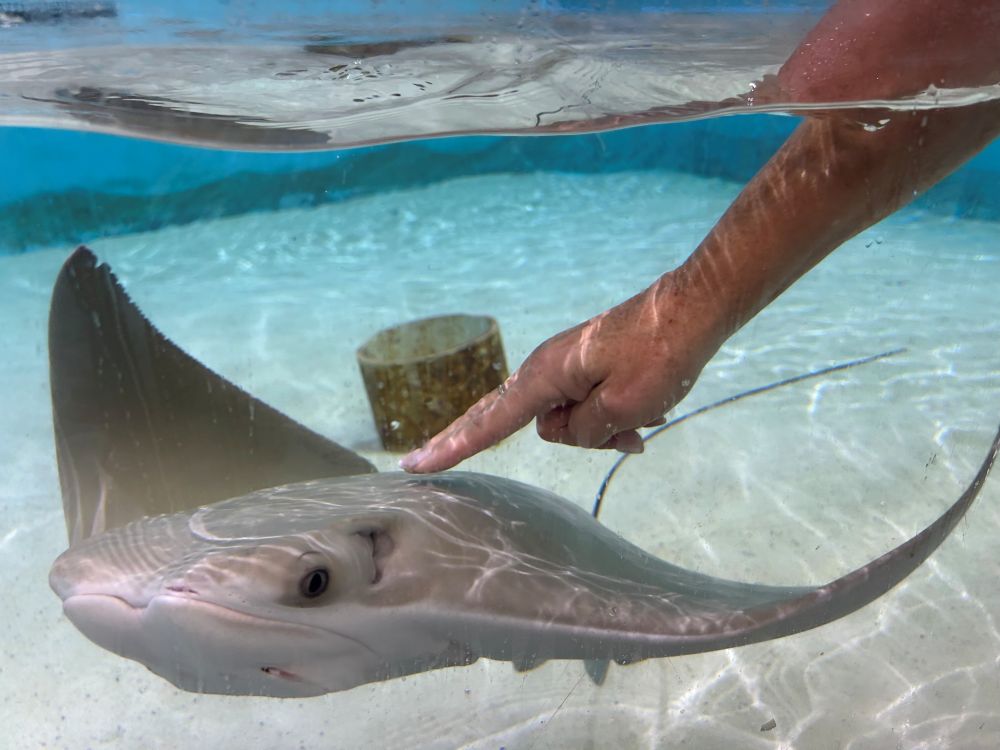
The touch pool exhibit is a 13-foot long touch tank where guests can get up close with unique species like Cownose Rays, Atlantic Stingrays, Guitarfish, and horseshoe crabs. Visitors are welcome to join in the excitement by helping us feed the rays during our daily feeding times at 11:00 AM,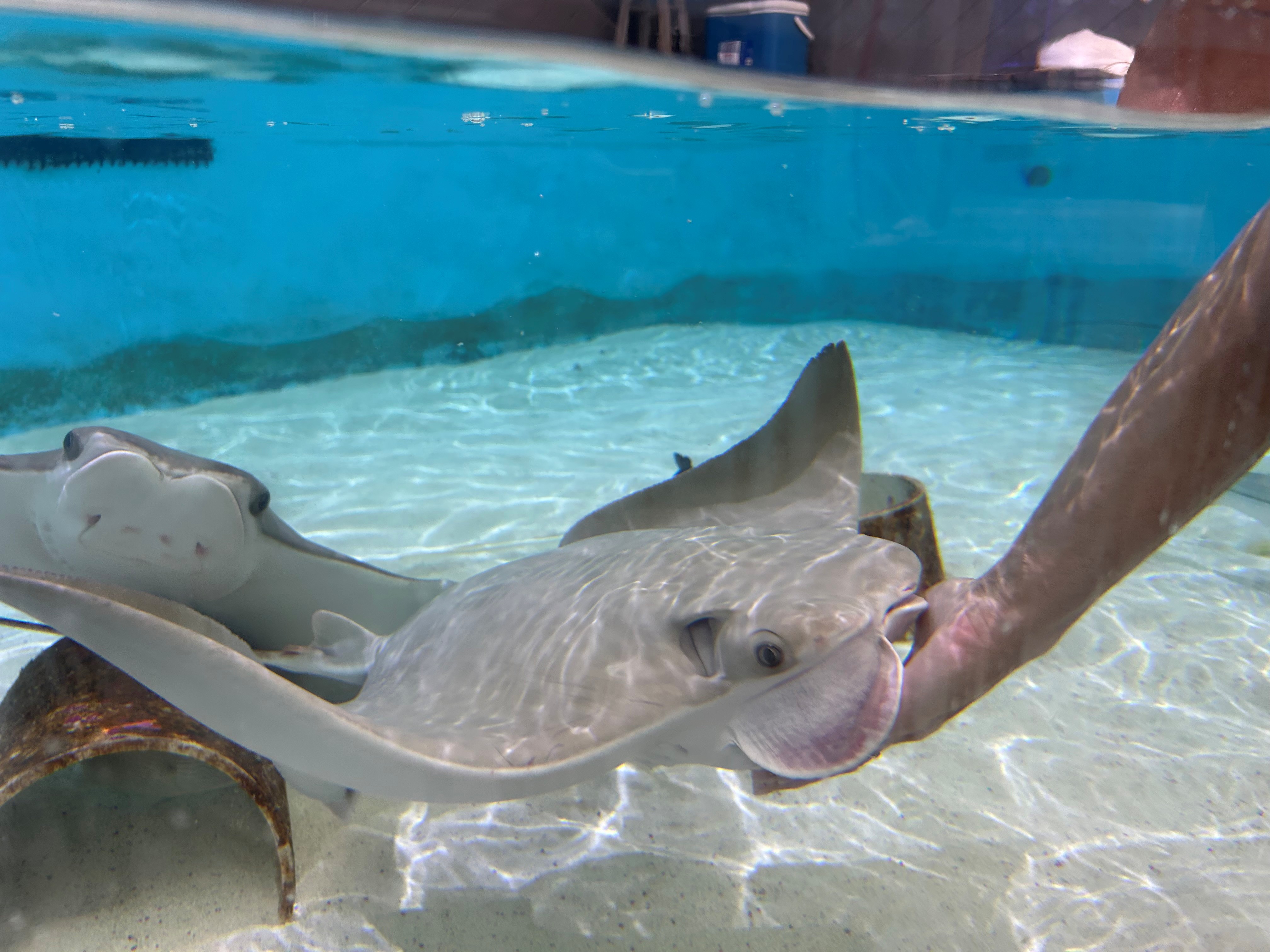 1:00 PM, and 3:00 PM.
Freshwater Exhibit
Volusia County hosts a wide range of freshwater habitats. Rivers, creeks, lakes, ponds and streams dominate the landscape and are home to hundreds of unique species of fish, reptiles, water birds and invertebrates. Peer through the viewing window of the Marine Science Center’s freshwater aquarium and discover how Florida’s native turtles and fish spend their time underwater. Above the water, you will get an up close and personal view of how our freshwater turtles love to spend the day stretched out in the sun.
Seahorse, Bio-fluorescence, and Life on the Ledge Exhibits
As you pass from the Marine Science Center’s main exhibit hall toward the covered Turtle Terrace, you will encounter a collection of exhibits that house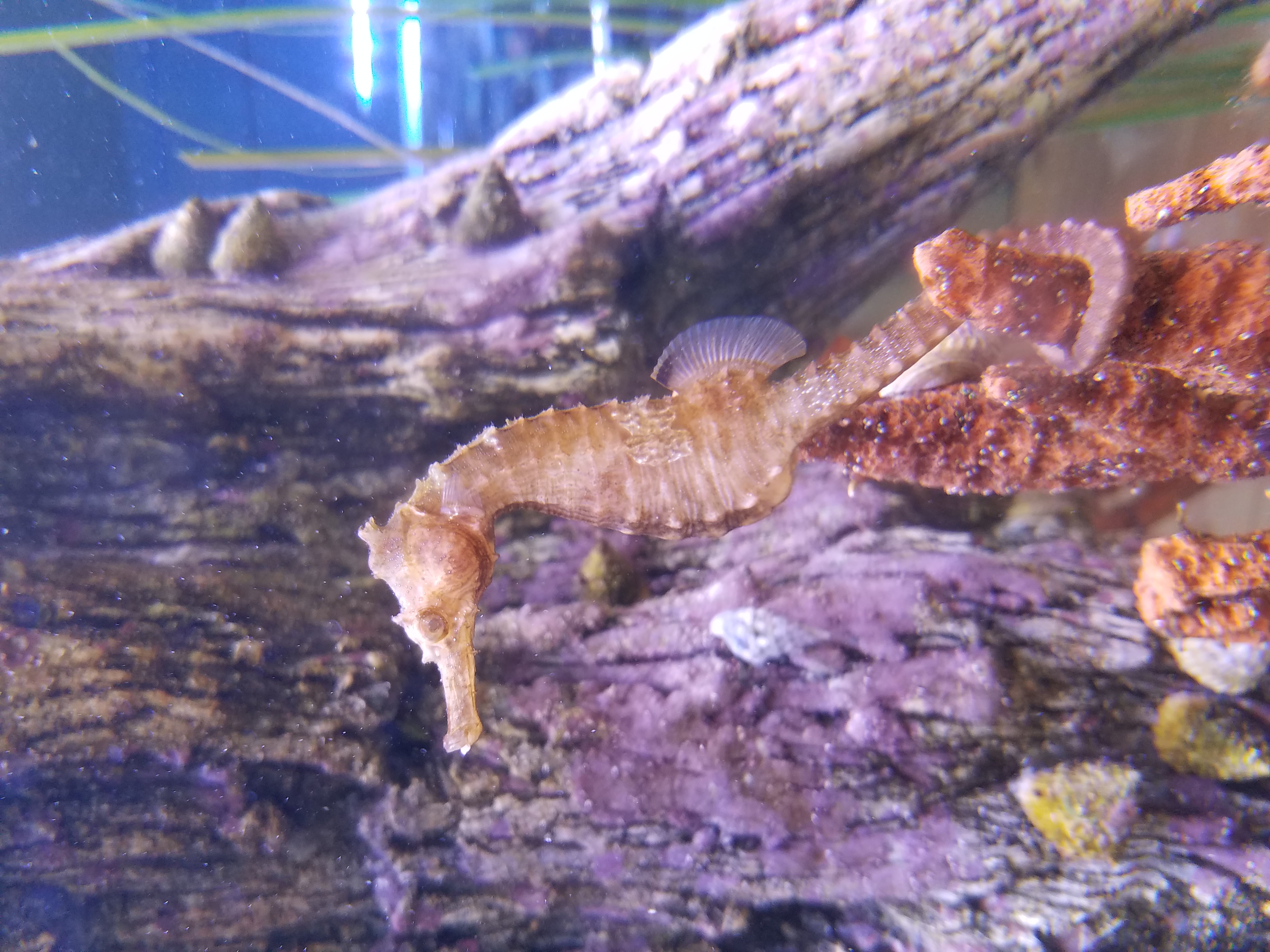 unusual sea creatures found within Florida’s marine habitats. Seahorses and the invasive lionfish are just a few of the interesting animals you can find in these aquariums.