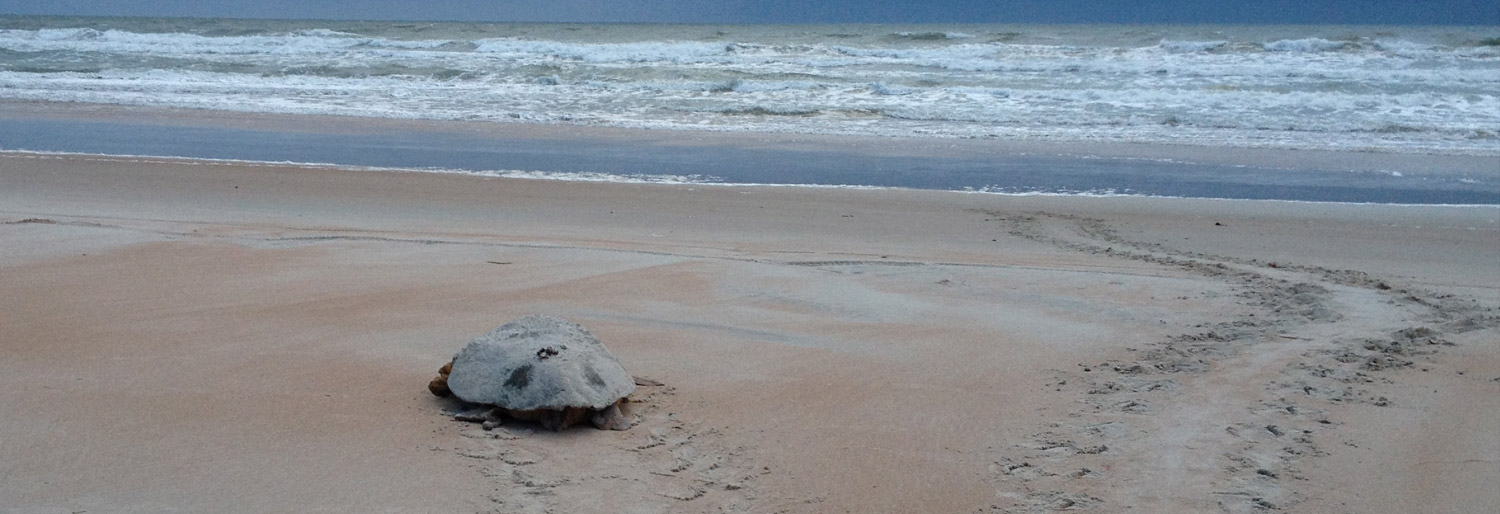
sea turtle heading back into the ocean from the beach

Marine Science Center


100 Lighthouse Drive
Ponce Inlet, Fl 32127

Main Building    386-304-5545
Turtle Hospital  386-304-5544
Bird Hospital     386-304-5530
Education         386-304-5529
Manager           386-304-5543


Injured Bird Drop-off   

  • If you find an injured bird, please call the MSC bird hospital at 386-304-5530, between the hours of 8:00 am and 4:00 pm. 
  • Bird Hopsital is located at 4965 S. Peninsula Rd. Ponce Inlet, FL 32127
  • If you find an deceased bird, please contact FWC (Florida Fish and Wildlife
    Conservation Commission)
    • Hotline 888-404-FWCC (3922).
  • To report a banded bird

Injured Turtle/Tortoise Drop-off


Freshwater turtles and land tortoise or turtles can be brought to the MSC during on-site animal staff hours (8 a.m. to 4 p.m. daily). 

  • If you find an injured sea turtle or native reptile, please contact the Florida Fish and Wildlife
    Conservation Commission (FWC) Hotline at 888-404-FWCC (3922).
  • For more information, please call the MSC at 386-304-5544, between the hours of 8:00 a.m. and 4:00 p.m.
  • MSC Emergency number 24/7 "Turtles on Call" 386-804-5587.
  • For Injured or sick sea turtle stranded at the beach or on a boat, please call the Florida Fish and Wildlife Conservation Commission (FWC) Hotline at 888-404-FWCC (3922).

I Found a Baby Bird...Now What?

  • Is the bird injured? This could look like: unable to flutter wings, bleeding, wings drooping unevenly, weak or shivering, or attacked by another animal. 

    1. If the answer is yes, contact a licensed wildlife rehabilitator 

  • Does the bird have feathers?

    1. If the answer is yes, the bird is a fledgling. Fledglings hop around on the ground and parents are still feeding it. Make sure fledglings are safe from cats, dogs, and people.

    2. If the answer is no, it's a nestling. Nestlings are too young to leave its nest.

  • Can you find an intact nest?

    1. If the answer is yes, put the baby in the nest. Keep an eye on it for 1 hour and watch for a parent to return.

    2. If the answer is no, make a new nest. Hang it close to the original location. Put the baby in the nest and watch it for 1 hour.

  • Are the parents returning?

    1. Yes, Leave the area, the baby bird is ok.

    2. No, Contact a licensed wildlife rehabilitator.

How to Rescue Baby Raptors and Waterbirds


Call a wildlife rehabilitator for specific advice before attempting to handle adult birds.

1. Note exactly where the bird was found. Look for a possible nest in a nearby tree. Note if its parents or siblings are in the area. This will be very important for release.

2. Prepare a box. Place a cloth with no frays or loops on the bottom of a cardboard box with holes punched in it or cat/dog carrier, and secure it closed.  

3. Protect yourself. Wear thick gloves, if available. Even sick and injured birds may try to stab with their beaks, grasp with their talons (claws), or slap with their wings. Birds may carry diseases or parasites such as lice, ticks, and intestinal parasites.

4. Cover the entire bird with a light sheet or towel, including its head.

5. Pick up the bird. With its wings folded up against its body, pick up the bird by its sides. If necessary, gently restrain the head so it does not bite or peck you.  Mind the feet so they do not grab you. Place the bird into the prepared container.

6. Warm the bird if it is cold or featherless. Use a heating pad under half of the box on low, or fill a water bottle with hot water and wrap it with a cloth and place it next to the bird inside the box. Double-check to make sure it does not leak to prevent the animal from becoming wet.

7. Secure the box shut.

8. Keep the bird in a dark, quiet place away from drafts. Do not give food or water. To reduce its stress and habituation, do not handle or talk to the bird. Keep children and pets away.

9. Sanitize after contact with the bird. Wash anything the bird was in contact with including your hands and clothes.

10. Contact a wildlife rehabilitator, state wildlife agency, or wildlife veterinarian as soon as possible. Do not keep the bird longer than necessary. Keep the bird in a container; do not let it loose in your house.

11. Get the bird to a wildlife rehabilitator as soon as possible.